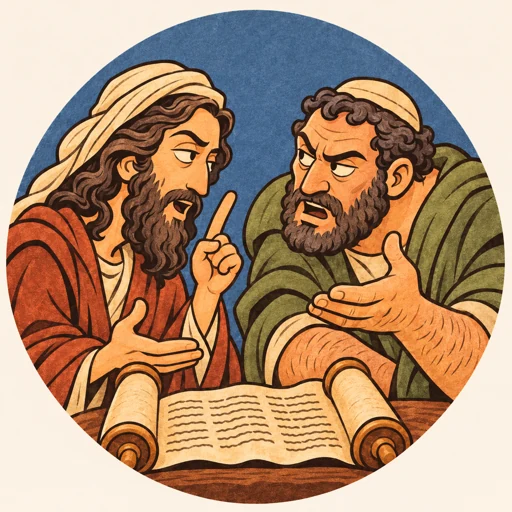
Rabbi Yochanan, Reish Lakish & twenty-four objections
Bava Metzia 84a:12–18
Core question
What makes a learning partner irreplaceable, and what can one wounding sentence cost?
Follow the argument
- At the Jordan, Yochanan offers Reish Lakish a life of Torah and marriage to his sister. Reish Lakish accepts; Yochanan teaches him until he becomes a great scholar.
- In a dispute about when blades are finished enough to become ritually impure, Yochanan says “a bandit knows his own trade.” Reish Lakish asks what Torah has given him; Yochanan answers that he brought him under the wings of the Shekhinah.
- Yochanan is hurt and Reish Lakish falls ill. Yochanan’s sister pleads for her children and her widowhood; he answers with Jeremiah 49:11. Reish Lakish dies.
- Elazar ben Pedat supports every statement with a baraita. Yochanan longs for the twenty-four objections that expanded their learning. He cries for ben Lakish, loses his mind, and dies after the Sages pray for mercy.
Discuss
- Why might a remark about Reish Lakish’s past wound more than a disagreement about blades?
- What does Yochanan mean when he says the teaching opened up through twenty-four objections and twenty-four answers?
- Why might the Gemara end with grief and death rather than reconciliation?
Teaching note
The legal question is ritual impurity of finished metal implements, not the use of weapons. Do not turn the deaths into a neat moral or assign blame beyond the text: the Gemara sets Yochanan’s hurt beside Reish Lakish’s illness, and Rashi reads Yochanan’s grief as regret. Treat the madness and death with care for students who are grieving. The marriage offer reflects the text’s world; discuss it without endorsing it.
Themes: Partnership · Words that wound · Grief
Where this goes next
Read the beauty passages earlier on 84a. Compare Rashi and Tosafot on 84a:12:1: had Reish Lakish studied before, and what does “Rabbi” mean in his reply? On 84b the narrative returns to Rabbi Elazar son of Rabbi Shimon.
Read the original on Sefaria ↗