TEACHER GUIDE · BETA
Two Claimants, One Cloak
Bava Metzia 2a: opening Mishnah and selected Gemara
Core question
What should a court do when two people hold the same object and each claims it?
Follow the argument
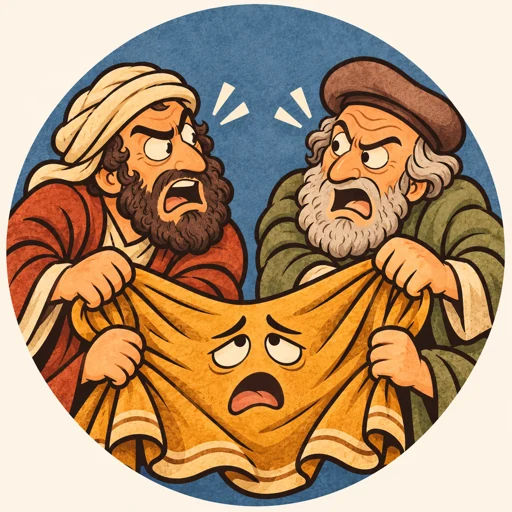
- Two people hold a garment. Each claims to have found it and to own all of it; shared possession is central to the case.
- The Mishnah requires each to swear to owning no less than half, then divides the garment's value between them.
- The Gemara examines why the Mishnah includes both finding and ownership language. Precise wording matters to the legal analysis.
- In a separate case, one claims all and one claims half. The half-claim concedes half to the other person; dividing only the disputed half produces shares of three-quarters and one-quarter.
Discuss
- Why does it matter that both people already hold the garment?
- Draw the conceded half and the disputed half. How does the unequal result follow?
- Does equal treatment always mean equal shares? What evidence would you want before deciding?
Teaching note
Keep the unequal-claims case separate from the original case. Use a paper rectangle to show the fractions; do not present this as a universal rule for property disputes.
Themes: Fairness · Evidence · Competing claims
Where this goes next
Read the Mishnah's additional cases and the Gemara's wording questions on Bava Metzia 2a. Rashi's opening comments help explain shared possession and the conceded half.
Read the original on Sefaria ↗