TEACHER GUIDE · BETA
Carob trees, future generations & belonging
Taanit 23a:14–17
Core question
What do we owe future people, and what do we owe the people standing in front of us?
Follow the argument
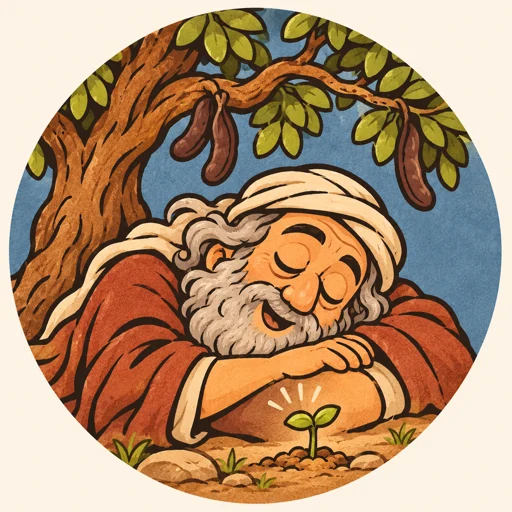
- Honi wonders about seventy years of dreaming, then questions a carob planter’s long horizon.
- The planter explains that earlier generations planted for him and he plants for later ones.
- Honi sleeps seventy years and wakes to find the planter’s grandson gathering fruit and his own family changed.
- Neither home nor study hall recognizes him. His distress and death bring the narrative from inheritance to the need for companionship.
Discuss
- What do you enjoy today because someone planted, built or taught before you?
- How does Honi’s experience change the meaning of the planter’s answer?
- Why can a community remember a teacher’s achievements but fail to welcome the person?
Teaching note
The ending includes death after a prayer born of distress. Read it sensitively; the closing proverb is literary expression, not guidance. Seventy years is the story’s timeline, not a carob-growing fact.
Themes: Generations · Belonging · Legacy
Where this goes next
Return to Psalm 126:1 and reread the story’s opening question. How does the ending complicate its initial wonder about a long sleep?
Read the original on Sefaria ↗